Munich attractions: itinerary for your visit
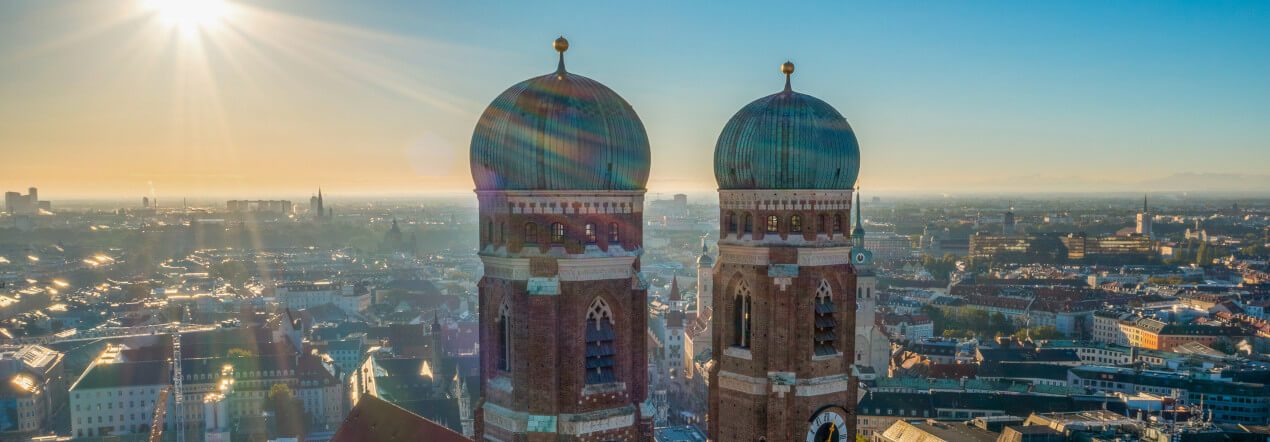
What is Munich best known for? This lively city in southern Germany is celebrated for its mix of medieval history, Baroque architecture, world-class museums, and a beer culture recognized around the world.
Munich attractions range from iconic landmarks to hidden gems, revealing the many sides of a city full of character and surprises.
Located in the south of the country, it is an easy destination to reach: Air Dolomiti offers direct flights to Munich Airport, one of the main European hubs. From the airport, the city centre can be reached quickly and easily thanks to an efficient and well-organized public transport network.
In this practical guide you will discover what to do in Munich, with a focus on historical landmarks, major museums and beer culture, helping you plan the best things to visit in Munich.
Medieval Munich attractions: iconic landmarks
The best way to explore medieval Munich is to follow a walking route through the historic city centre, compact and easy to visit in half a day.
Recommended route: the historic heart of Munich
1. Marienplatz – starting point
Marienplatz is the main square of Munich and has been the centre of city life since the Middle Ages. Both historic town halls overlook the square.
2. Neues Rathaus (New Town Hall)
Famous for its Glockenspiel, the mechanical clock comes to life every day with historical scenes.
Tip: stop to watch the show, one of the most popular attractions in Munich, Germany.
3. Altes Rathaus (Old Town Hall)
A symbol of medieval Munich, it stands on the eastern side of Marienplatz and is one of the oldest buildings in the city.
4. Frauenkirche – Munich Cathedral
Just a short walk away, this Gothic cathedral is easily recognizable by its twin towers, nearly 100 meters high.
Good to know: from the south tower you can enjoy panoramic views over the historic centre.
5. Isartor – medieval city gate
The final stop of the route, Isartor is one of the best-preserved medieval gates and marks the former boundary of the city.
Top Baroque Landmarks and Must-See Things in Munich
Baroque Munich represents one of the most fascinating periods in the city’s history, when the Bavarian capital emerged as a major political, religious and cultural centre under the Wittelsbach dynasty, shaping many of the most iconic things to visit in Munich today.
During this era, Munich was profoundly transformed through ambitious urban planning and the construction of grand palaces and monumental churches, reflecting the power, wealth and artistic ambitions of the Bavarian court.
This Baroque itinerary combines historic residences, richly decorated religious buildings and expansive green spaces, offering a clear insight into the splendour and ceremonial life of Baroque Munich and highlighting some of the most impressive things to visit in Munich for history and architecture lovers.
Recommended route: the Wittelsbach legacy
- Residenz of Munich – starting point
The Munich Residenz is the largest urban palace in Germany and was the official residence of Bavarian rulers for over four centuries. The complex includes elegant courtyards, richly decorated state rooms and several museums, offering a clear sense of the power and splendour of the Bavarian court. - Theatinerkirche
Located just a few steps from the Residenz, this church immediately stands out for its ochre-coloured façade and large dome. Inspired by Italian Baroque churches, it is one of the symbols of Baroque Munich. - Michaelskirche (St. Michael’s Church)
Situated along lively Neuhauser Straße, Michaelskirche is considered one of the most important Renaissance-Baroque buildings north of the Alps. It is closely linked to the Counter-Reformation and houses the crypt of the Wittelsbach family. - Nymphenburg Palace
The final stop of the route, Nymphenburg Palace was the summer residence of Bavarian rulers. Surrounded by an extensive park with canals, pavilions and formal gardens, it is perfect for a relaxing walk after visiting the interiors. This Munich castle is one of the city’s most impressive historical landmarks.
Museums in Munich: history, art, science and innovation
Munich is one of Europe’s cultural capitals and offers one of the richest museum landscapes in Germany. This museum-focused itinerary allows visitors to explore masterpieces of classical and modern art, scientific excellence and industrial innovation.
Recommended route: must-see museums in Munich
- Kunstareal and Pinakotheken – starting point
The Kunstareal district is the artistic heart of Munich, where several major museums are located within walking distance.- Alte Pinakothek: it hosts one of the largest collections of European painting from the Middle Ages to the 18th century, including works by Dürer, Raphael and Rubens.
- Neue Pinakothek: dedicated to 19th-century art, with a focus on Romanticism and Realism.
- Pinakothek der Moderne: a contemporary space combining modern art, design, architecture and graphic arts.
- Deutsches Museum
Located on an island in the Isar River, the Deutsches Museum is the world’s largest museum of science and technology. Interactive exhibits make it engaging for visitors of all ages.
- BMW Museum and BMW Welt
For motor and design enthusiasts, the BMW Museum tells the story of one of the world’s most famous car brands. Right next to it is BMW Welt, a modern and free exhibition space that brings together technology, architecture and innovation.
Do you know about the Bavarian brewing tradition?
In Munich, beer is much more than a drink: it is a central part of local culture and everyday life for the city’s residents.
The Bavarian brewing tradition dates back to the Middle Ages and has become a strong symbol of identity, closely linked to community and conviviality. The event that best represents this connection is Oktoberfest, a nationally important celebration that attracts visitors from all over the world and, for Germans it represents a moment to celebrate tradition, social life and history.
For Munich’s residents, beer stands for togetherness, shared moments and respect for local customs, a ritual that accompanies city life throughout the year.
Other questions
What shouldn’t you miss when visiting Munich?
When visiting Munich, you shouldn’t miss its historic heart around Marienplatz, home to iconic landmarks such as the Neues Rathaus and the Frauenkirche. Exploring the city’s Baroque heritage, including the Munich Residenz and Nymphenburg Palace, is also essential. To complete the experience, a visit to one of Munich’s renowned museums or a traditional beer hall offers an authentic taste of local culture.
What to do in one day in Munich?
One day in Munich can be spent exploring the historic city centre on foot, starting from Marienplatz and walking through the Old Town to landmarks like the Viktualienmarkt and Isartor. In the afternoon, dedicate time to a major museum, such as the Deutsches Museum or one of the Pinakotheken. End the day relaxing in a beer garden or enjoying Bavarian cuisine in a traditional tavern.
What is the best time to visit Munich?
The best time to visit Munich is from May to September, when the weather is pleasant and the city hosts many outdoor events. Autumn is ideal for those planning to visit Munich during Oktoberfest, while winter is popular for its Christmas markets.
