Best things to do in Venice: 10 must-see experiences
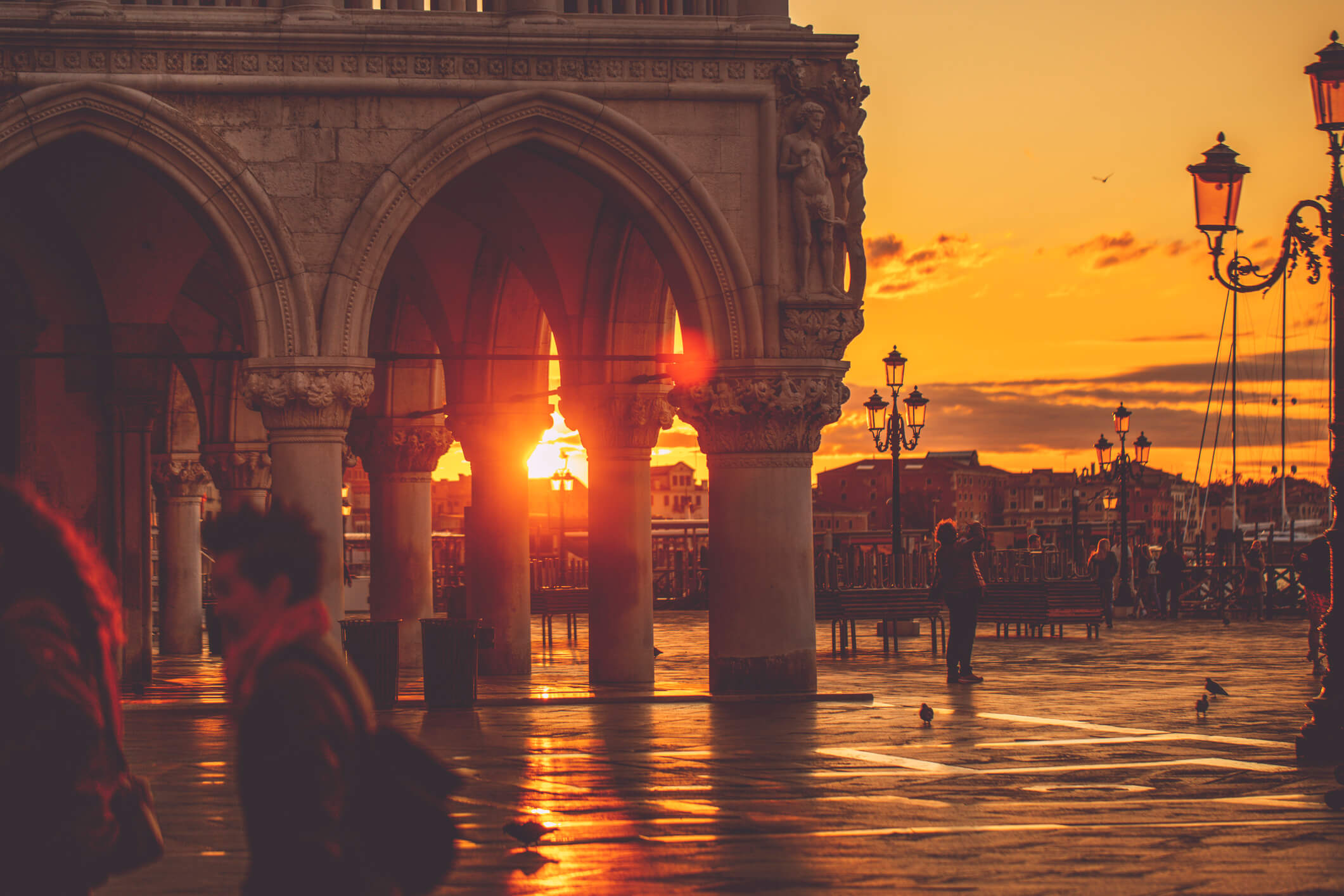
Built across more than 100 islands in a shallow lagoon, Venice is one of the world's greatest engineering achievements.
Surrounded by canals instead of roads and shaped by centuries of maritime trade, Venice offers a unique blend of history, culture and architecture. Visitors arriving via Venice Airport can easily reach the historic center and begin exploring the city's most famous landmarks and neighbourhoods.
Here are the top 10 things to do in Venice to discover the city's cultural heritage, artistic treasures and centuries-old traditions.
1. Watch the Sunset from St Mark's Bell Tower
Originally built as a watchtower for ships approaching the lagoon, and rising nearly 99 metres above St Mark's Square, St Mark's Bell Tower is one of the most scenic places to visit in Venice and a remarkable place to admire the city from above.
The experience is perfectly complemented by the artistic and architectural treasures of St Mark's Basilica, one of the city's most celebrated landmarks.
2. Explore the Doge's Palace
At first glance, the Doge's Palace looks more like a lavish residence than a seat of government. Behind its elegant marble façade lies a collection of grand halls, monumental staircases and richly decorated chambers that reflect the wealth and influence of historic Venice. Among the highlights is the vast Grand Council Hall, one of the largest rooms in Europe, where important decisions once shaped the future of the Venetian Republic.
Today, the palace remains one of the most fascinating places to visit in Venice and an essential stop for anyone interested in Venice's history and architecture.
3. Discover Venice beyond the crowds
To discover a different side of Venice, head beyond St Mark's Square and explore neighbourhoods such as:
- Cannaregio – known for its quieter canals and authentic local atmosphere;
- Dorsoduro – home to museums, galleries and scenic waterfront walks.
Here, quiet canals replace crowded thoroughfares, while local cafés, artisan workshops and small galleries offer a glimpse into everyday Venetian life. For many travellers, wandering through these lesser-known areas becomes one of the most memorable things to do in Venice.
While exploring these quieter areas, visitors can also enjoy a gondola ride through lesser-known canals, offering a different perspective on Venice away from the busiest tourist routes!
4. Experience unforgettable moments at Teatro La Fenice
Few places capture Venice's artistic heritage as vividly as Teatro La Fenice. This world-renowned opera house is where some of Italy's most famous operas, including Verdi's La Traviata, were first performed, and it has welcomed legendary artists such as Maria Callas and Luciano Pavarotti throughout its history.
Even today, its international reputation is reinforced by the annual New Year's Concert, broadcast to audiences around the world.
5. Discover Modern Art at the Peggy Guggenheim Collection
Not all of Venice's artistic treasures date back to the Renaissance. Overlooking the Grand Canal, the Peggy Guggenheim Collection brings together modern masterpieces in a setting unlike any other.
Once the private residence of Peggy Guggenheim herself, the museum welcomes visitors into a world of bold colours and innovative artistic movements that changed the course of twentieth-century art.
6. Experience the Venice Biennale
Few events transform a city quite like the Venice Biennale. Every two years, Venice becomes a global stage for contemporary art and architecture, attracting visitors from every corner of the world.
By blending contemporary creativity with Venice's historic setting, the Venice Biennale offers one of the best things to do in Venice for art lovers.
7. Experience Venice from a Gondola
Few experiences are more closely associated with Venice than a Gondola ride. A Gondola ride in Venice offers a unique perspective on the city, gliding silently through narrow canals and beneath centuries-old bridges while revealing hidden corners often missed by those exploring on foot.
For many travellers, this remains one of the best things to do in Venice and an essential part of the city's timeless charm.
8. Celebrating the Carnival in Venice
Every winter, the Carnival in Venice attracts visitors from across Italy and around the world, eager to experience its elegant masks, elaborate costumes and centuries-old traditions.
During the celebrations, Venice takes on a magical atmosphere as historic squares, canals and palaces become the backdrop for performances, parades and cultural events.
9. Visit the Gallerie dell'Accademia
The Gallerie dell'Accademia offers one of the best introductions to Venice's artistic heritage. Housed in a historic complex overlooking the Grand Canal, the museum brings together masterpieces that tell the story of the city across the centuries.
Walking through its galleries reveals how Venice evolved from a powerful maritime republic into one of Europe's leading cultural centers, with art playing a central role in shaping its identity.
10. Enjoy an Aperitivo at a Traditional Bacaro
A visit to Venice would not be complete without experiencing the atmosphere of a traditional bacaro.
While many visitors associate bacari with spritz and cicchetti, the real appeal lies in the experience itself: standing along a canal, chatting with friends and soaking up the city's vibrant yet relaxed atmosphere.
Many bacari also offer the opportunity to sample traditional Venetian fish dishes, an important part of the city's culinary heritage and local food.
For those looking beyond the major landmarks, spending an evening in a bacaro is one of the most authentic things to do in Venice.
FAQ
What is the best time to visit Venice?
Venice is a year-round destination, but spring and autumn are often considered the best times to visit thanks to mild temperatures and fewer crowds.
Summer is ideal for attending major cultural events such as the Venice Film Festival, while winter offers the unique atmosphere of Carnival and festive celebrations.
What should you not miss in Venice?
If it is your first visit, don't miss St Mark's Square, St Mark's Basilica, the Doge's Palace and the Rialto Bridge. Exploring Venice's canals and historic neighborhoods is also an essential part of the experience.
How do you get around Venice?
Built among a network of canals connected by hundreds of bridges, Venice is a city designed to be explored on foot and by water. Walking is the best way to discover its narrow streets, hidden squares and historic neighbourhoods, while vaporetti (water buses) provide convenient connections between major attractions, different districts and the islands of the Venetian Lagoon.
What is a typical breakfast in Venice?
A typical breakfast in Venice often includes an espresso or cappuccino paired with a freshly baked brioche, frequently filled with pastry cream. Visitors looking to discover local flavors can also try Baicoli, traditional Venetian biscuits dating back to the Venetian Republic, or enjoy a tramezzino, the soft sandwich that has become one of the city's most iconic culinary specialties.
Is 3 days enough time in Venice?
Yes, three days provide enough time to discover many sides of Venice. Visitors can explore world-famous landmarks, wander through quieter neighbourhoods, sample local specialities and take a boat trip to islands such as Murano and Burano.
It is an ideal amount of time to experience the city's history, culture and timeless charm.
