Carry on plane luggage: size and dimensions
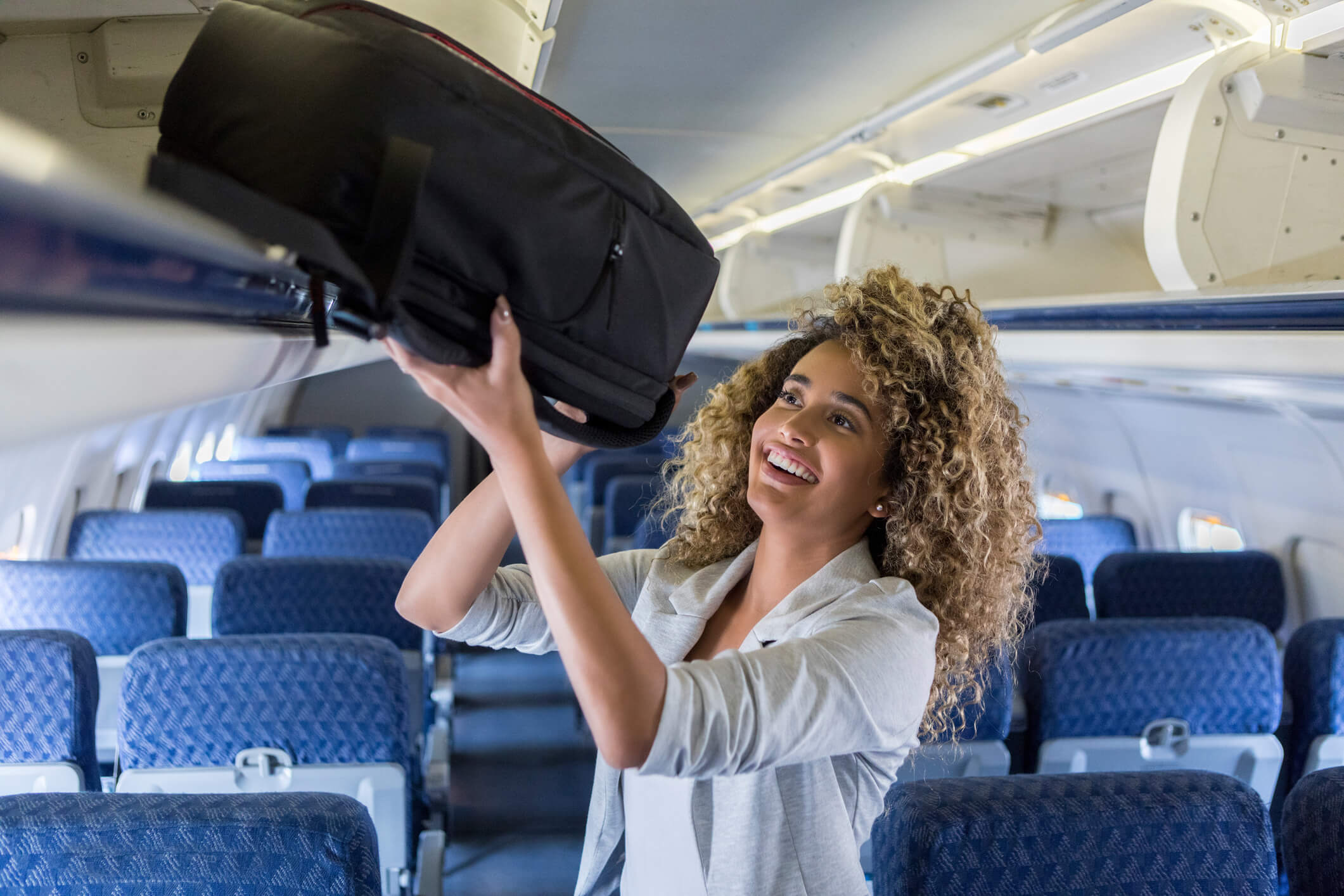
Carry on luggage, also known as cabin luggage o hand luggage, includes the bags and personal items that passengers are allowed to bring into the aircraft cabin during a flight. While every airline sets its own rules regarding carry on luggage size and weight, understanding these requirements before travelling can help passengers prepare more efficiently and avoid unexpected issues at the airport.
Whether you are planning a weekend getaway or a longer journey, travelling with cabin luggage only can make your airport experience quicker and more convenient.
European carry on luggage regulations, size and weight limits
Carry on luggage may include cabin suitcases, travel backpacks, duffel bags and other types of hand baggage, provided they comply with the airline's baggage policy. Although many European carriers follow similar practices, there is currently no single European regulation establishing standard hand baggage dimensions, hand baggage size or weight limits. Instead, each airline determines its own cabin luggage size, cabin luggage dimensions and maximum permitted weight according to its operating procedures and fare conditions.
Air Dolomiti publishes detailed Hand Luggage Rules to help passengers understand the baggage allowance included with each fare, including the permitted carry on luggage size, weight limits and any additional conditions that may apply.
Checking the applicable baggage requirements before travelling helps passengers to:
- avoid unexpected baggage charges at the airport or boarding gate;
- reduce the risk of cabin luggage being transferred to the aircraft hold if it exceeds the permitted size or weight limits;
- prepare for security screening with greater confidence.
Passengers travelling with carry on luggage only who have already completed online check-in can often proceed directly to the security screening area without stopping at the check-in desks, unless the airline requires additional document or baggage verification before departure.
How to measure your carry-on bag and avoid unexpected baggage charges
Measuring your carry-on bag before travelling is one of the simplest ways to avoid unexpected issues at the airport. Even a few extra centimetres or an overweight bag may result in the luggage being transferred to the aircraft hold, with additional baggage charges depending on the airline's policy.
When checking your hand baggage size, always measure the bag at its widest and tallest points, including wheels, handles, side pockets and any other protruding parts. These elements are included in the overall dimensions used by airlines to determine whether a bag complies with the permitted cabin luggage dimensions.
Many airports also provide baggage sizers near the check-in area or boarding gates. The luggage should fit inside the frame without being forced. Some airlines, particularly low-cost carriers, also provide separate sizers for smaller personal items that must fit underneath the seat in front of the passenger.
Weight is another important factor to consider. Depending on the airline, hand luggage weight may be checked:
- at the check-in desk, where staff may weigh cabin baggage before departure;
- at the boarding gate, where bags that appear larger or heavier than expected may be inspected.
If you are travelling with Air Dolomiti, baggage allowances, including the permitted dimensions and weight for the Economy Basic Fare, are available online. Reviewing these requirements in advance helps passengers prepare with confidence and reduces the likelihood of unexpected charges at the airport.
Packing efficiently is just as important as choosing the right bag. Organising clothing and personal belongings carefully helps maximise the available space while keeping the luggage within the permitted size and weight limits.
Carry on luggage rules and restrictions
Carry on luggage allows passengers to keep essential items with them throughout the journey, but everything brought into the aircraft cabin must comply with airport security procedures and the airline's baggage policy. While some restrictions are common across most airports, others may vary depending on the screening technology used at the departure airport.
Liquids
Liquid restrictions may differ according to local security procedures. At many airports, liquids must still comply with the traditional screening rules:
- each container must not exceed the maximum permitted volume;
- containers should be placed inside a single transparent, resealable plastic bag where required;
- the bag may need to be presented separately during security screening.
Some airports equipped with the latest CT security scanners may allow larger liquid containers and no longer require passengers to remove them from their cabin luggage. As procedures continue to evolve, travellers should always check the latest guidance provided by their departure airport before departure.
The following items are generally permitted when required during the journey:
- baby food;
- medicines, together with any supporting prescription or medical certificate if requested;
- food for passengers with specific dietary requirements.
Electronic devices and batteries
Personal electronic devices and lithium batteries are generally permitted in hand luggage but are subject to specific safety restrictions because damaged or defective batteries may present a fire risk. Power limits, quantity restrictions and packaging requirements may vary depending on the airline and the type of battery carried.
Air Dolomiti provides dedicated guidance on travelling with electronic devices and batteries.
Forbidden items in hand luggage
Certain restrictions remain valid regardless of the airport or airline. Weapons, explosive materials, flammable substances and other dangerous goods are not permitted in the aircraft cabin.
The list of forbidden items in hand luggage is not exhaustive and can be expanded at any time. Travellers should therefore always consult the applicable airline and airport requirements before departure.
Personal item vs. cabin trolley: what's the difference?
A personal item and a cabin trolley are two different types of cabin baggage and are stored in different locations on board. Whether passengers may bring one or both on board depends on the airline's baggage policy and the fare purchased.
Personal item
A personal item is a small bag designed to keep essential belongings within easy reach during the flight. Depending on the airline, it may include:
- a handbag or purse;
- a laptop bag;
- a small backpack;
- a briefcase or similar personal bag.
When carried on board, a personal item should fit underneath the seat in front of the passenger.
Cabin trolley
A cabin trolley is a cabin bag intended for clothing, shoes and other travel essentials. It may be a wheeled suitcase, a travel backpack or another bag that complies with the airline's permitted size and weight limits.
When accepted on board, cabin trolleys are normally stored in the overhead compartment above the passenger seats.
The number of cabin items permitted, together with their maximum dimensions and weight, always depends on the airline's baggage policy and the fare purchased.
FAQ
Can vacuum storage bags reduce the size of carry on luggage?
Yes. Vacuum storage bags can reduce the volume occupied by clothing by removing excess air, helping travellers make better use of the available space inside their cabin luggage. However, they do not reduce the actual weight of the bag, so both the permitted dimensions and weight limits should always be checked before travelling.
Is a stroller considered carry on luggage?
When travelling with a young child, a stroller is generally transported separately from standard carry on luggage. Depending on the airline and the type of stroller, passengers may be able to bring an ultra-compact folding model into the cabin or use it throughout the airport before handing it to ground staff at the boarding gate. Transport procedures and permitted stroller types may vary between airlines.
Are pets considered carry on luggage?
When pets are allowed to travel in the aircraft cabin, they must be transported in an approved pet carrier that complies with the airline's size and weight requirements. The carrier is usually placed underneath the seat in front of the passenger and may count towards the permitted cabin baggage allowance, depending on the airline's policy. As pet travel rules vary between airlines and destinations, passengers should always check the applicable requirements before travelling.
