INSIDE THE HANGAR: EMBRAER MAINTENANCE
Air Dolomiti. Let's get (even) closer.

Watch the video
on our Youtube channel
Ladies and gentlemen, this is your Captain speaking.
It’s a magnificent day, because we’re about to take you inside our hangars in Florence and Verona. We’ll tell you – and show you a video– about some Embraer maintenance procedures.
Try not to get lost in all the acronyms, buttons and bolts.
Towing into hangar, powering up and system checks | Embraer 190/195
First, the aeroplane is towed into the hangar and secured. With its elegant lines, the Embraer carries its 30,000 kg well.
The team applies wheel chocks, removes the tow track and positions the access ladder, setting up the necessary guards to work safely. Every action appears to be measured down to the last millimetre. The technicians move according to a perfectly synchronised pattern.
Here we go.
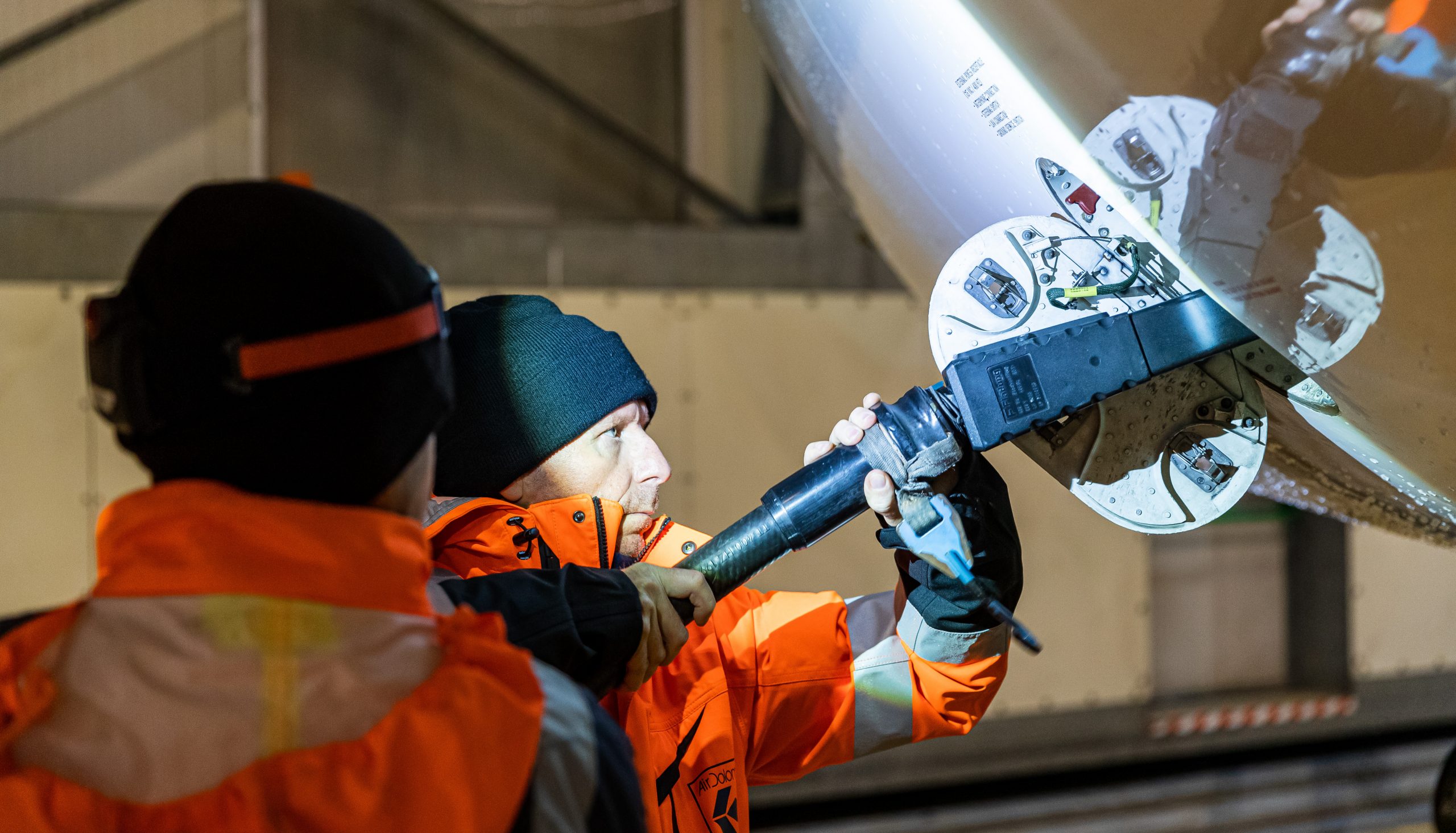
Step one: connect the external power supply to the receptacle to provide 115 V at 400 Hz from the ground. This means that the systems are switched on without starting the engines, allowing checks to run smoothly and safely (it’s also the most efficient choice, assures the captain).
Powering an aircraft from the ground means listening to it in active standby mode: lights, avionics, indicators... all with the engines off. Ready for the next checks?
Step two: visual inspection. We’re looking for signs of wear, inspecting the fan blades one by one, and checking the electrical wiring and connections. Accessible parts are inspected inside and out: general condition, cleanliness, fastenings and integrity.
In technical jargon, this is known as continuing airworthiness.
It means keeping the aircraft compliant and reliable over time, taking care of it so that it’s always in optimal condition.
Step three: the technician switches off the battery from the cockpit if the aircraft is powered, then accesses the avionics compartment to disconnect and remove the battery. The unit weighs over 24 kg, which is roughly the same as his Labrador dog, he explains with a smile. Taking great care with the surrounding equipment, he inserts the new unit, which is then securely fastened. Once switched back on, the battery is ready for a functional test: stable voltage, regular charging capacity, no abnormal messages.
Logbook successfully updated!
Inside the hangar: flap and landing gear check
The technicians go under the wing. First, they observe panels, actuators, tracks and fixing points. Then they test flap extension. Cockpit indicators confirm that the check has been successful.
Flaps increase lift at low speeds. This results in more stable take-off and landing procedures, with a greater safety margin on short runways.
Underneath the Embraer, technicians check wheels, brakes, nitrogen shock absorbers and actuators, paying close attention to lines and connections to detect any traces of fluid. Today’s ‘menu’ also includes dynamic testing of the landing gear (through complete extension and retraction).
You can now experience what we’ve described to you in words through images.
Special thanks to staff and technicians at the Florence and Verona hangars for their professionalism and support during filming.
- By the way: do you know why the landing gear is retracted during flight?
Obvious answer: to reduce aerodynamic drag. It’s also designed to withstand loads well above the maximum landing weight. Find all this and much more in this article.